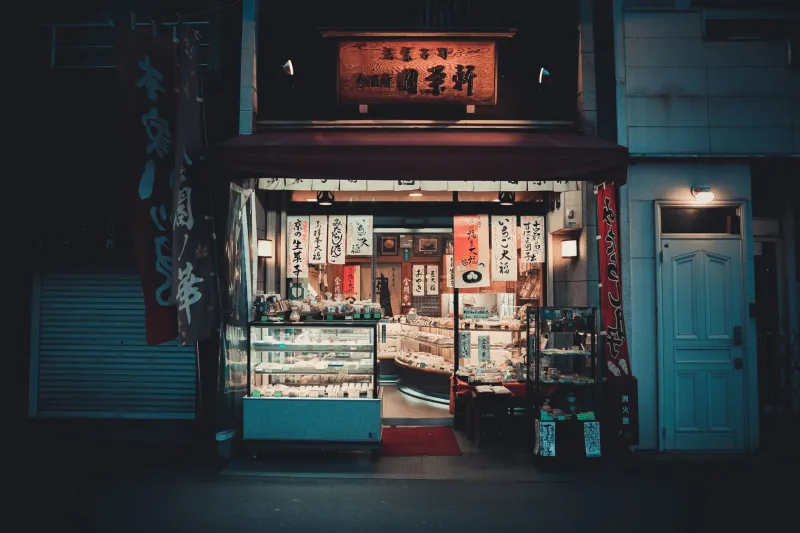
The Quiet Revolution: Why a Generation of American Travelers Is Choosing Depth Over Destinations
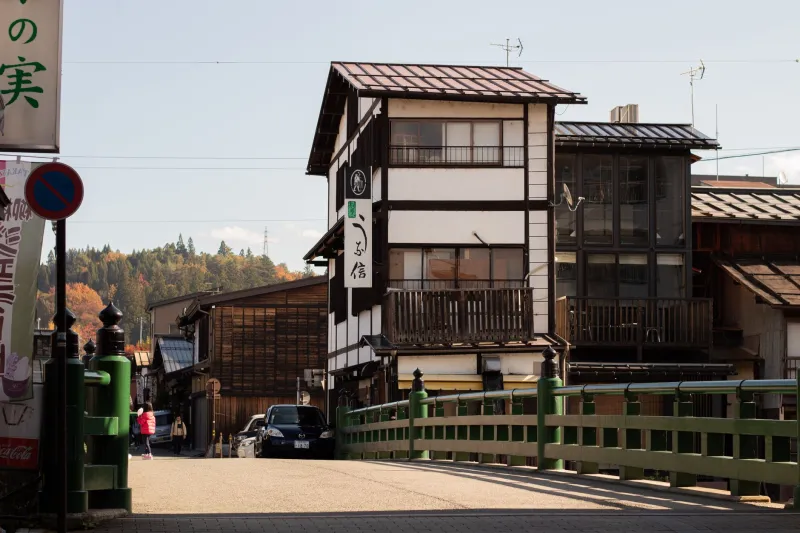
For a long time, the standard American trip to Japan followed a script so reliable it barely needed to be written down. Land in Tokyo. Spend three days overwhelmed by the city. Take the shinkansen to Kyoto. Visit the temples, photograph the geisha district, eat the kaiseki dinner. Maybe a day trip to Nara for the deer. Back to Tokyo for a final night of ramen and duty-free shopping. Home.
It's a good trip. Nobody's arguing otherwise. But something has been quietly changing in the way a growing number of American travelers approach Japan, and the shift says something interesting about where travel culture is headed more broadly.
The script is getting rewritten. And the new version has room for places like Nogata.
The Data Behind the Feeling
Travel industry researchers have been tracking a meaningful evolution in traveler preferences over the past several years. A 2023 report from the Adventure Travel Trade Association found that "experiential" and "cultural immersion" travel categories were growing significantly faster than traditional sightseeing tourism among American travelers aged 28 to 45. Separate research from travel booking platforms consistently shows increased interest in secondary and tertiary destinations in countries where the primary cities are well-established on the tourist circuit.
In Japan specifically, the numbers reflect a country that tourism officials have been quietly working to redistribute. The Japanese government's tourism strategy has explicitly encouraged visitors to explore beyond the Golden Route — the Tokyo-Kyoto-Osaka corridor — partly to relieve overcrowding at major sites and partly because regions like Kyushu, Tohoku, and the San'in coast represent genuine travel value that the standard itinerary leaves untouched.
Nogata sits squarely in this emerging geography. It's not on any top-ten list. It doesn't have a viral moment associated with it. What it has is the kind of authentic, unhurried regional life that a growing segment of American travelers have started specifically seeking out — not as a compromise for missing the highlights, but as the highlight itself.
From Bucket Lists to Something Better
The bucket-list model of travel made a certain kind of sense in the pre-internet era, when access to information about destinations was limited and the primary challenge was simply knowing where to go. Guidebooks organized the world into must-sees and optional extras. The goal was coverage.
The internet, paradoxically, has made this model less satisfying rather than more. When every major tourist site has been photographed from every angle, reviewed by thousands of visitors, and experienced vicariously through countless YouTube vlogs before you ever book a flight, the act of showing up in person carries a different weight. You already know what the Fushimi Inari gates look like. You've seen the Shibuya crossing from a drone. The discovery element — which is what travel was always fundamentally about — has been stripped from the most famous destinations.
This is where places like Nogata become genuinely interesting as a travel proposition. Nobody has pre-processed your experience of Nogata for you. The town exists in something close to its natural state, as far as tourism is concerned. Discovery, real discovery, is still possible here.
Case Studies in Itinerary Abandonment
Talk to American travelers who've spent time in Nogata, and a pattern emerges. Most of them didn't plan to be there. They arrived by recommendation, by accident, or by the deliberate decision to throw out their original itinerary and see what happened.
David, a software engineer from Seattle, had originally planned a standard two-week Japan trip: Tokyo, Hakone, Kyoto, Osaka. A colleague who'd visited Fukuoka suggested he extend the trip by a few days and head north into the Chikuho region. "I almost didn't do it," he said. "It wasn't in any of the guides I'd read. I couldn't find more than a paragraph about Nogata anywhere online. That actually ended up being the selling point."
He spent four days there. He came back with no particularly dramatic stories — no once-in-a-lifetime encounters, no extraordinary meals, no Instagram-breaking photographs. What he came back with was a feeling he struggled to name precisely: "Like I'd actually been somewhere, rather than just seen something."
That distinction — being somewhere versus seeing something — keeps coming up in conversations with travelers who've spent time in Japan's less-visited regions. It points to a fundamental difference in the quality of attention that different kinds of travel demand.
Amanda, a middle school teacher from Denver, articulated it differently. She'd done the Golden Route twice and loved it both times. The third trip, she deliberately built around Kyushu's secondary cities and rural areas. "I realized I'd been approaching Japan like a museum," she said. "Moving from exhibit to exhibit, making sure I'd checked the right boxes. Nogata was the first place I visited in Japan where I felt like a person in a town rather than a tourist at an attraction."
What 'Real Travel' Actually Means in the 2020s
The phrase "authentic travel" has been used so frequently in travel marketing that it's nearly meaningless. Every luxury resort in Bali claims to offer authentic local experiences. Every food tour in every major city promises genuine cultural immersion. The word has been emptied out by overuse.
But the underlying desire it once pointed to hasn't gone away — it's just become more sophisticated. The travelers who end up in places like Nogata aren't looking for authenticity as a product. They're looking for the conditions under which real experience becomes possible: places that aren't organized around their presence, communities that have lives independent of the tourist gaze, rhythms that belong to the place rather than to the visitor's schedule.
Nogata provides those conditions almost by default. The town's economy doesn't depend on tourism. Its culture isn't performed for outside consumption. Its residents are friendly to visitors in the way that people in functional communities tend to be — genuinely, without it being their job.
A Different Kind of Trip Planning
If this argument has landed, here's what the practical application looks like. The travelers who get the most from Nogata tend to approach it with a specific mindset: they come with curiosity rather than an agenda, they budget time generously rather than optimizing for coverage, and they treat confusion and inefficiency as features rather than bugs.
This means resisting the urge to fill every hour with scheduled activities. It means eating at the restaurant that looks most like somewhere a local would eat, even if — especially if — the menu isn't in English. It means staying long enough to develop a small sense of the town's rhythms: which coffee shop opens earliest, which neighborhood gets busier in the evenings, what the market looks like on different days of the week.
None of this is revolutionary advice. But it runs counter to the habits that most American travelers have built up through years of optimized, reviewed, and content-ready travel. Unlearning those habits takes a specific kind of place — somewhere that doesn't reward the old approach and quietly teaches a better one.
Nogata is, among other things, an excellent teacher.
The travelers who leave having learned something don't always know exactly what the lesson was. They just know they want to come back — which is, in the end, the only review that matters.