Beyond Tokyo and Kyoto: How Places Like Nogata Are Quietly Rewriting the Rules of Japanese Travel

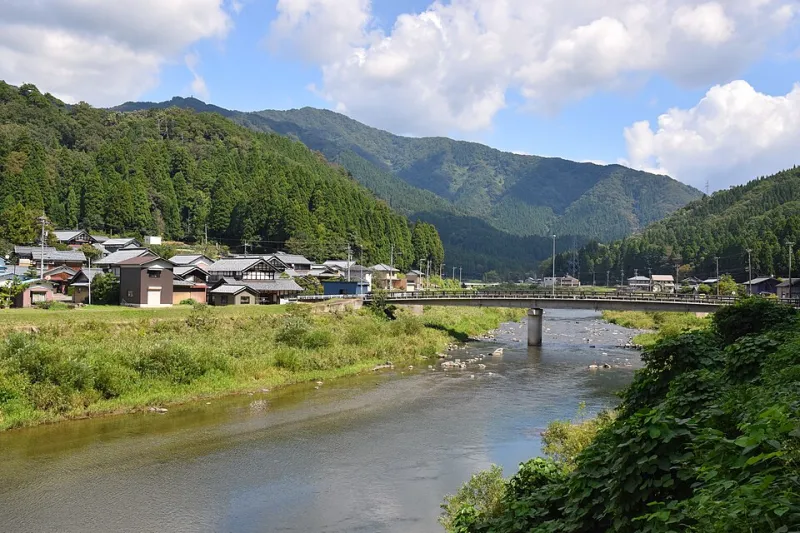
Photo: katorisi, CC BY-SA 3.0, via Wikimedia Commons
There's a moment that every seasoned Japan traveler knows. You're standing in front of Fushimi Inari at 9 a.m., trying to frame a photo that doesn't include forty other tourists doing the exact same thing, and you wonder: Is this really it? The brochure version of Japan — the one built on bullet trains, iconic torii gates, and department store sushi — is still spectacular. Nobody's disputing that. But a growing wave of American travelers is quietly asking a different question: What's behind the brochure?
The answer, increasingly, looks a lot like Nogata.
The Overtourism Problem Nobody Wants to Talk About
Let's be honest about what's happening in Japan's most famous destinations. Kyoto's Gion district now posts signs in multiple languages asking visitors not to photograph residents. Certain trails near Mount Fuji have been partially barricaded to manage foot traffic. Airbnb saturation in Tokyo's trendiest neighborhoods has pushed rental prices beyond the reach of the locals who used to live there.
This isn't a uniquely Japanese problem — it's the global cost of Instagram-era travel. But Japan feels it acutely because so much of its tourism infrastructure was built around a handful of marquee cities. When those cities overflow, the experience suffers for everyone: the visitors who feel cheated by the crowds, and the residents who feel like props in someone else's vacation.
Travel writer and long-time Japan resident Carla Mendenhall, who has covered the country for outlets including Condé Nast Traveler and Afar, has watched the shift happen in real time. "Five years ago, I'd tell people to get off the Golden Route," she says. "Now I tell them that getting off the Golden Route is the trip. The places that haven't been packaged yet — that's where Japan is still itself."
Nogata, a modest city in Fukuoka Prefecture with deep roots in coal mining history and agricultural tradition, fits that description almost perfectly.
What the Numbers Actually Show
Here's something worth sitting with: Japan received roughly 25 million international visitors in a recent pre-pandemic year. Of those, the vast majority passed through just five or six urban centers. The remaining 1,700-plus municipalities — places with their own festivals, their own food cultures, their own architectural histories — received a fraction of a fraction of that traffic.
Nogata sits in that overlooked majority. And according to local tourism coordinator Hiroshi Tanaka, that obscurity is no longer something the city is trying to fix by mimicking bigger destinations. "We used to think we needed to compete with Fukuoka City," he explains. "Now we understand that being different from Fukuoka City is our strength. Visitors don't come here looking for a watered-down version of something they've already seen. They come here because this is something they haven't."
That reframe — from competition to distinction — is happening in small cities across Japan, and Nogata is among the clearest examples of what it looks like when it works.
The Authenticity Question
Americans have a complicated relationship with the word "authentic." We use it constantly, we crave it, and we're often terrible at recognizing it when it's right in front of us. In travel, authenticity has become so commodified that you can now buy "authentic experiences" as a line item on a package tour.
What makes Nogata different isn't that it's performing authenticity — it's that it hasn't had to think about it yet. The ramen shops here haven't been reviewed to death on international food apps. The local sake breweries aren't offering Instagram-optimized tasting flights. The neighborhood izakayas close when the regulars go home, not when the last tourist has ordered.
Repeat visitor Dana Kowalski from Portland, Oregon, put it plainly after her second trip to Nogata: "I've done Tokyo four times. I love it. But in Nogata, I had a two-hour conversation with a retired coal miner who showed me photos of his father's work crew. Nobody arranged that. It just happened because I was in a place where people still have time for each other."
That kind of unscripted human connection is increasingly rare in high-traffic destinations — not because the people aren't there, but because the pace and volume of tourism makes it structurally difficult. Nogata's lower visitor numbers create space for exactly the kind of encounter that most travelers say they're looking for.
Sustainability Without the Buzzword
The travel industry has spent the last decade talking about sustainable tourism in largely theoretical terms. Carbon offsets, eco-lodges, responsible wildlife encounters — the conversation is important, but it often feels disconnected from the actual mechanics of how most people travel.
Small-city tourism like Nogata offers a more practical version of the same idea. When you eat at a family-run restaurant in Nogata, the money stays in Nogata. When you stay at a locally owned guesthouse, the economic benefit doesn't evaporate into a global hotel chain's quarterly report. When you buy vegetables at a roadside farm stand, you're participating in a supply chain that has existed for generations and doesn't require a marketing campaign to survive.
"We don't use the word sustainability much," admits Tanaka with a laugh. "We just try to keep things the way they've always been. Maybe that's the same thing."
It might be. And for American travelers who are increasingly conscious of the footprint their vacations leave behind, that kind of quiet, structural sustainability is more compelling than any eco-certification.
The Ripple Effect of Choosing Differently
Here's the thing about travel choices: they compound. When a critical mass of visitors starts gravitating toward overlooked destinations, those places gain the economic breathing room to preserve what makes them worth visiting in the first place. Craftspeople keep their workshops open. Family restaurants don't have to sell to developers. Festivals that were losing their younger participants start attracting them back.
Nogata is at an interesting inflection point right now — known enough to have developed a modest but growing international visitor base, but not yet so popular that it's had to compromise its character to accommodate the volume. For travelers paying attention, that window is genuinely exciting.
"I tell everyone who asks me about Japan: go to Tokyo, yes. See Kyoto, absolutely," says Mendenhall. "But build in three days somewhere that isn't on the poster. You'll come home understanding something about Japan that the poster can't show you."
For a lot of those travelers, that somewhere is turning out to be Nogata — a city that never set out to become a travel revelation, and maybe became one precisely because of that.
Why Now
The timing matters. Japan's broader push to distribute tourism more evenly across its regions has created new infrastructure — better regional rail connections, updated visitor signage, expanded English-language resources — that makes places like Nogata genuinely accessible to first-time international visitors in ways they weren't a decade ago.
Combined with a generation of American travelers who've grown skeptical of the highlight-reel approach to travel, the conditions are right for a genuine shift. Not a trend, exactly — more like a correction. A recalibration toward the kind of travel that leaves you changed rather than just checked off.
Nogata has been waiting, quietly and without particular urgency, for that moment to arrive.
It's here.