Invisible on the Map, Unforgettable in Person: The Case for Nogata as Japan's Last Honest Travel Destination
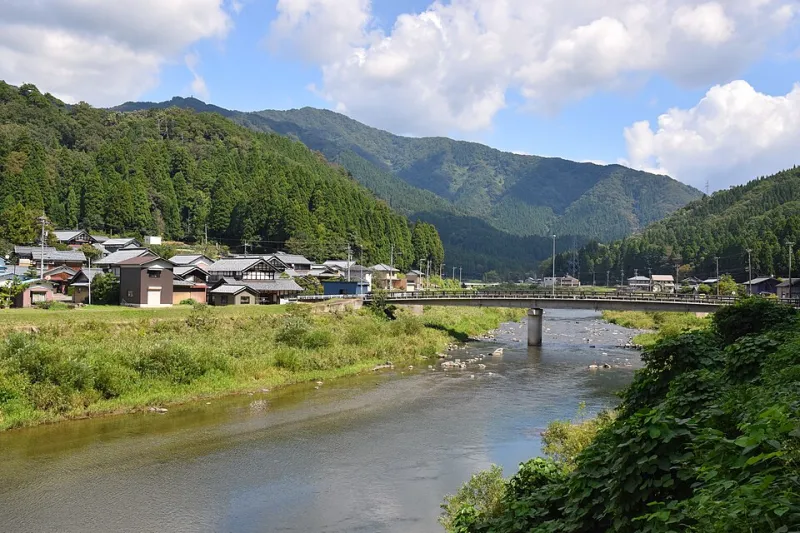
Photo: 雷太, CC BY 2.0, via Wikimedia Commons
Let's be real for a second. A lot of us who make the trip to Japan are chasing something that's getting harder and harder to find. We've seen the photos — the bamboo groves with the perfect morning light, the torii gates reflected in still water, the ryokan breakfast arranged like a still-life painting. We want that Japan. The one that feels ancient and unhurried and genuinely foreign in all the best ways.
The problem? So does everyone else. And when everyone shows up to the same places carrying the same expectations, something quietly disappears. The experience becomes managed, curated, performed. You're not discovering Japan anymore — you're consuming a product designed to look like Japan.
Nogata doesn't do that. It can't, and it doesn't try. That's what we want to talk about.
The Infrastructure of Inauthenticity
Here's a counterintuitive idea: the better a Japanese destination is at welcoming international tourists, the less it has to offer them.
That sounds harsh, but think it through. English-language signage, QR codes with translated menus, staff trained to interact with foreign visitors, souvenir shops stocked with regionally-branded snacks — all of that is genuinely helpful. Nobody's arguing otherwise. But every one of those accommodations is also a layer of insulation between you and the place itself. It tells you what to look at, what to buy, how long to stay, and what to feel. The experience gets pre-digested.
Nogata hasn't built that infrastructure. Not because it's behind the times, but because international tourism simply hasn't arrived here in numbers large enough to demand it. Walk into a neighborhood izakaya in Nogata and the owner isn't going to hand you a laminated picture menu with English descriptions. You're going to point at things, use your phone translator, laugh a little, maybe get something you didn't expect, and have a meal you'll remember for years. That's not a problem to solve. That's the experience.
What Happens When Nobody's Performing for You
One of the strangest things about visiting a heavily-touristed Japanese destination is how quickly you start to feel like a passive observer in someone else's show. The locals are gracious, the aesthetics are immaculate, but there's a subtle distance — a professional remove — that's hard to shake.
Nogata closes that distance fast.
When you're one of a handful of foreign visitors in a given week, people don't have a script for you. The farmer who waves you over at the roadside stand isn't performing hospitality — he's just being a person who grows things and likes talking about them. The grandmother at the shrine isn't accustomed to tourists asking about the seasonal offerings — she might actually sit down and explain the whole thing to you, in Japanese, with hand gestures, for forty-five minutes. You'll understand maybe a third of it. It'll be one of the highlights of your trip.
That quality of encounter — unscripted, slightly awkward, genuinely mutual — is almost impossible to manufacture. It only happens when a place hasn't been optimized for your visit.
The Tyranny of the Must-See
Tokyo is extraordinary. Kyoto is extraordinary. Nobody here is arguing otherwise. But both cities now operate under the weight of their own reputations. There are things you must see, neighborhoods you have to walk through, restaurants you need to book months in advance. The itinerary writes itself before you even land, and if you deviate from it, you spend the whole trip wondering what you missed.
Nogata has no such tyranny. There's no singular attraction demanding your attention, no checklist of obligatory experiences, no TripAdvisor ranking telling you how to prioritize your hours. What the region has instead is a kind of ambient richness — the kind you absorb by wandering, by following a smell down a side street, by stopping at a vending machine and realizing you're standing in front of a temple that's been there for four hundred years.
That kind of discovery requires one thing: slack. Time that isn't already spoken for. Headspace that isn't already filled with expectations. Nogata gives you both, almost by default.
The Instagram Problem (and Nogata's Accidental Solution)
Somewhere along the way, travel photography stopped being about remembering where you went and started being about proving you were there. The result is a global tourism economy increasingly organized around photogenic moments — and a slow, steady erosion of everything that makes a place worth visiting in the first place.
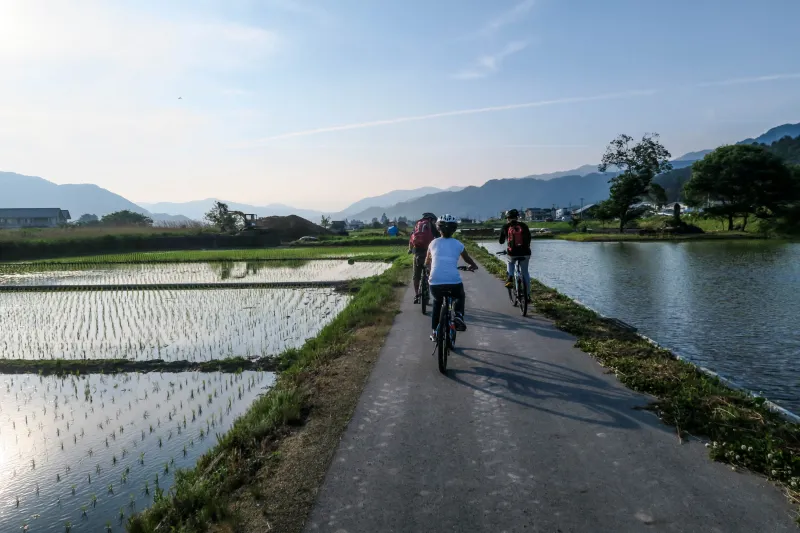
Nogata is not Instagram-famous. There's no single image that defines it, no visual shorthand that signals you've arrived. And paradoxically, that makes it an incredibly rich place to photograph. The light on the rice fields at dusk. An old man playing shogi outside a hardware store. A festival lantern half-wrapped in plastic against the rain. None of these images are going to rack up likes. All of them are completely real.
When you're not chasing the shot everyone else already has, you start actually looking. That shift — from performing travel to experiencing it — is the whole ballgame.
So What Does Nogata Actually Offer?
Fair question. "Lack of tourism infrastructure" isn't exactly a trip-planning hook. So let's be specific.
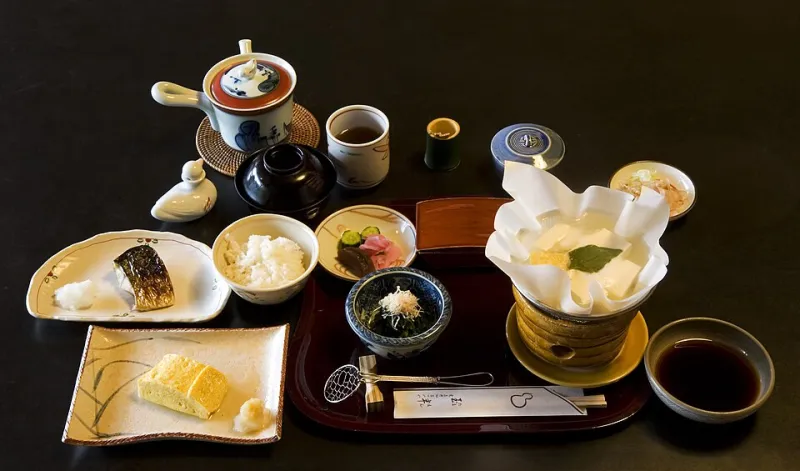
Nogata sits in Fukuoka Prefecture, which means you're already in one of Japan's most food-obsessed regions. The local food culture here runs deep and unselfconscious — tonkotsu in a shop that's been making the same broth for decades, seasonal vegetables from farms close enough that you can see them from the road, sake and shochu served by people who know exactly where it came from and why it tastes the way it does.
The surrounding landscape is the kind of rural Japan that most visitors only see from a bullet train window — forested hills, river valleys, quiet agricultural towns that move at a pace that feels almost radical after a week in a major city. There are shrines here that predate most American cities by a thousand years, and you might visit them entirely alone.
And then there's the human element. The people of Nogata are not accustomed to being a destination. Which means when you show up, curious and respectful and willing to engage on their terms, the response tends to be warm in a way that feels completely unperformed.
The Honest Case
We're not going to oversell this. Visiting Nogata requires more flexibility than visiting a city built for tourists. You'll need a higher tolerance for ambiguity, a willingness to navigate without much English-language help, and an appetite for experiences that don't come with guardrails.
But if you're reading a site called Nogata Explorer, there's a decent chance that's exactly what you're looking for.
The Japan you've always wanted to find — the one that feels real, that surprises you, that asks something of you in return — it still exists. You just have to go somewhere nobody told you to go.
Nogata is that somewhere.