Slow Down and Step Off: Discovering Old Japan One Train Station at a Time in Nogata
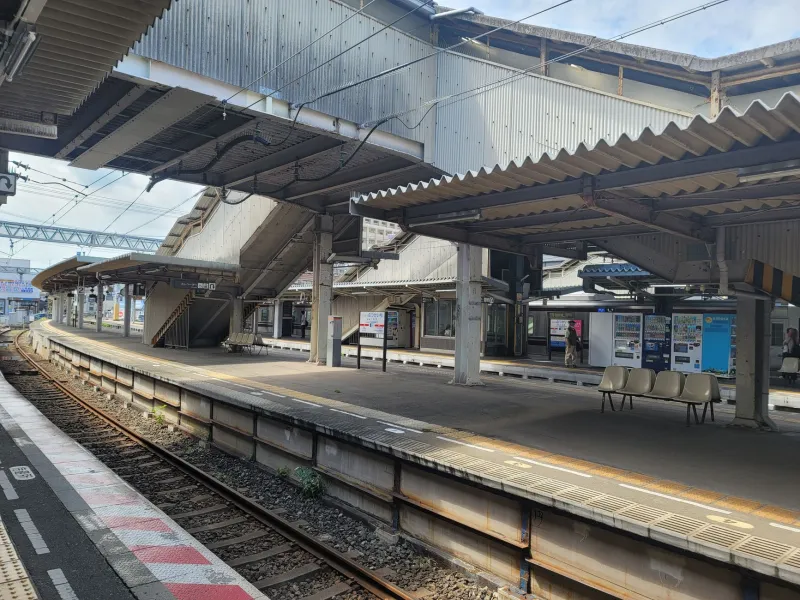
There's a particular kind of magic that happens when a train pulls into a small Japanese station and you're the only one who gets off. The platform empties in seconds. A station attendant glances up from behind a glass window. Somewhere nearby, a bicycle bell rings. And suddenly, you realize you've arrived somewhere completely real.
That's the experience waiting for you along Nogata's railway lines — and honestly, it's one of the best-kept secrets in all of Fukuoka Prefecture.
Why Most Travelers Miss This Entirely
Here's the thing about the way most Americans approach Japan: we plan around the shinkansen. We zip from Tokyo to Kyoto to Hiroshima, marveling at the speed and the efficiency, and we come home with a highlight reel that looks almost identical to everyone else's. Nothing wrong with that — those cities are incredible. But there's a whole other Japan running on slower tracks, and Nogata sits right at the heart of it.
The Chikuho region, where Nogata is located, was once the industrial engine of modern Japan. Coal mining drove everything here for decades — the economy, the culture, the infrastructure. When that industry wound down, it left behind something unexpected: a railway network that never got torn up, never got redeveloped, never got turned into something unrecognizable. It just kept going, at its own pace, carrying locals and the occasional curious traveler between neighborhoods that time seemed to forget.
Those tracks are still there. Those stations are still standing. And if you know how to read them, they'll tell you the whole story.
Nogata Station: The Starting Point That Deserves More Than Five Minutes
Most visitors treat Nogata Station the way you'd treat a highway rest stop — a quick pause before getting somewhere else. That's a mistake worth correcting.
Spend a little time around the station area and you'll notice the bones of something older underneath the everyday hustle. The surrounding shotengai — those covered shopping arcades that defined mid-century Japanese commercial life — still have a lived-in authenticity that's increasingly hard to find in bigger cities. Shops that have been family-run for two or three generations sit next to newer spots without any sense of conflict. Nobody's performing nostalgia here. It's just how things are.
Grab a coffee from one of the small cafes near the station exit and watch the morning rhythm unfold. Schoolkids in uniform. Older residents doing their shopping. A delivery truck navigating a street that was clearly designed before delivery trucks existed. It's unhurried in a way that feels almost radical if you've just come from Fukuoka City.
Riding the Heisei Chikuho Railway: A Window You Can Actually Look Through
If Nogata Station is the gateway, the Heisei Chikuho Railway is the key. This regional line runs through the heart of the old coal country, connecting small towns and rural communities that rarely appear on tourist maps. Riding it feels less like transportation and more like flipping through a photo album of rural Japanese life.
The trains themselves have a charming no-frills quality — nothing like the sleek expresses that get all the attention. Some cars are painted in bright colors as part of local pride campaigns. The seats face outward on certain stretches so you can watch rice paddies and forested hills scroll past the windows.
Get off at the smaller stops. Seriously — this is the whole point. Stations like Ita and Kanada are tiny, often unstaffed, and surrounded by neighborhoods where you can walk for twenty minutes without seeing another tourist. That's not a bug. That's the feature.
What You Find When You Actually Walk Around
Here's what happens when you step off at one of these smaller stations and just start walking: Japan reveals itself at a completely different resolution.
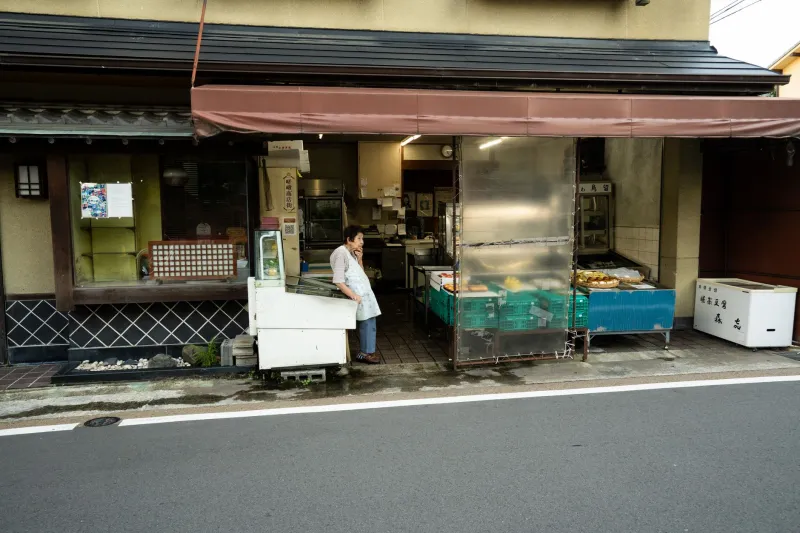
You find the kind of local shop that doesn't have an English menu or an Instagram presence — the one where the owner looks mildly surprised to see you but waves you in anyway. You find old wooden homes with elaborate tile work on their roofs, a remnant of the prosperity that coal money once brought to this region. You find covered walkways and narrow alleys and the occasional small shrine tucked between two buildings like a secret the neighborhood is keeping.
The railway heritage shows up in subtle ways too. Old station signage preserved on building walls. Former rail workers' housing that's been converted into residences without losing its original character. In some spots, you can still find traces of the narrow-gauge tracks that once served the mines — iron lines disappearing into the landscape like ellipses at the end of a sentence.
Practical Notes for the Platform-Curious Traveler
If you're planning to explore Nogata's railway culture, a few things worth knowing before you go:
Get an IC card. A Suica or Nimoca card makes hopping on and off regional trains seamless. You won't need to figure out ticket machines at every stop, which matters more than you'd think when the station has no English signage.
Morning is best. The light is better, the platforms are quieter, and the local shops near stations tend to open early. There's something about a small Japanese train station at 8 a.m. that afternoon can never quite replicate.
Don't plan too tightly. The whole point of this kind of travel is flexibility. Know which stations you want to try, but leave room for the stop that just looks interesting from the window. You can always catch the next train — they run regularly enough.
Talk to the station staff where you can. At staffed stations, the attendants often know the surrounding neighborhood better than any guidebook. A little patience and a translation app can go a long way.
The Bigger Picture
There's a concept in Japanese called ma — roughly translated as the meaningful pause, the space between things. It shows up in architecture, in music, in conversation. And it shows up, unexpectedly, in the experience of traveling by local train through a region like Nogata.
The gaps between stations aren't dead time. They're the whole point. They're where you look out the window and realize the Japan you came to find has been here all along, just off the shinkansen route, waiting for someone to slow down enough to notice it.
Nogata's stations won't dazzle you with grandeur. They won't show up on any list of Japan's most photogenic railways. But step off the train, take a breath, and start walking — and you might find that this quieter, unhurried version of Japan is exactly the one you were hoping to discover.