Ancient Footsteps, Modern Boots: The Sacred Mountain Trails of Nogata You've Never Heard Of
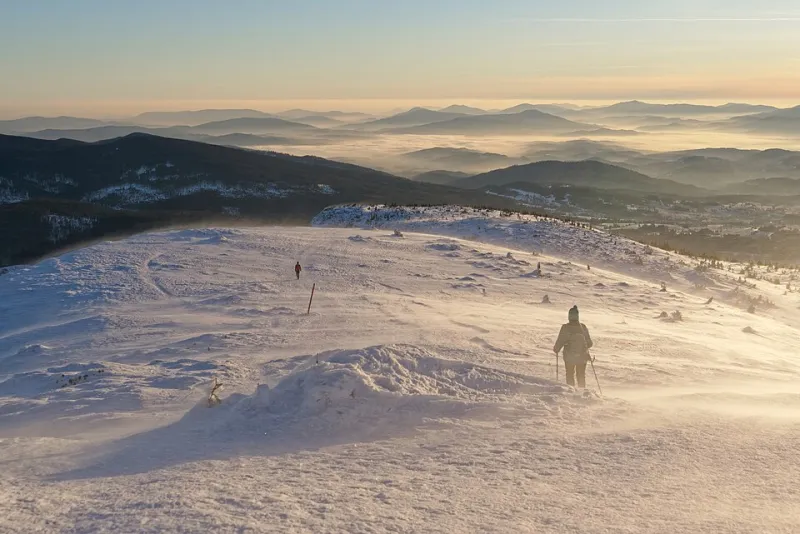
Photo: Jakub Hałun, CC BY-SA 4.0, via Wikimedia Commons
Most people planning a trip to Fukuoka Prefecture spend their research hours obsessing over ramen joints, Hakata's neon-lit streets, or the manicured perfection of Dazaifu's plum blossoms. And look — no judgment there. But if you're the kind of traveler who gets a little restless when a destination feels too polished, too packaged, too expected, then Nogata has something waiting for you on higher ground.
The mountains ringing this part of northern Fukuoka don't show up on many international hiking lists. They're not chasing Fuji's silhouette or competing with the dramatic caldera country further south in Kyushu. What they offer instead is quieter, and honestly, more interesting — trails where the geological story and the human story are so tangled together that you can't really separate them. These are paths that generations of pilgrims, farmers, and local wanderers have worn into the earth. Walking them feels less like exercise and more like a conversation with the landscape.
The Pilgrimage Roots You'll Feel Before You Read About Them
Here's the thing about sacred mountain culture in Japan: you don't always need a guidebook to recognize it. You feel it in the placement of a small stone marker half-hidden by ferns. You notice it in the way a trail suddenly straightens and widens before cresting a ridge, as if the path itself is preparing you for something. The mountains around Nogata carry that energy in abundance.
The region sits within a broader network of Kyushu's mountain pilgrimage traditions, many of which trace back to Shugendo — an ancient Japanese practice blending Buddhist and Shinto elements that treated mountain ascent as a form of spiritual training. While the major Shugendo circuits in Japan attract serious scholarly attention, the smaller pilgrimage routes threading through areas like Nogata have largely stayed under the radar. That's not a flaw. That's the whole point.
Local historians in the area will tell you that the trails connecting Nogata's peaks were used by traveling monks and yamabushi (mountain ascetics) who moved between regional temples and shrines long before roads made such journeys easy. Some of the carved stone markers you'll pass on these routes are worn smooth by centuries of hands reaching out to touch them — a gesture of connection that hikers still unconsciously repeat today.
What the Ridgelines Actually Look Like
Let's get practical for a moment, because the scenery absolutely earns its own paragraph.
Nogata's surrounding highlands are characterized by forested ridges that open unexpectedly into panoramic views across the Chikuho basin — the broad valley that was once the industrial heart of Kyushu's coal-mining era. On a clear morning, you can stand on a summit trail and look out over a landscape that layers time like a geological cross-section: ancient rice paddies in the valley floor, mid-century mining infrastructure slowly being reclaimed by vegetation, and the low green mountains stretching toward the horizon in every direction.
It's not the jaw-dropping drama of somewhere like the Japanese Alps. It's better for a certain kind of hiker — the kind who wants to feel in a landscape rather than just photographing it from a distance. The scale is human. The trails are manageable. And the absence of crowds means you're genuinely alone with whatever the mountain decides to show you that day.
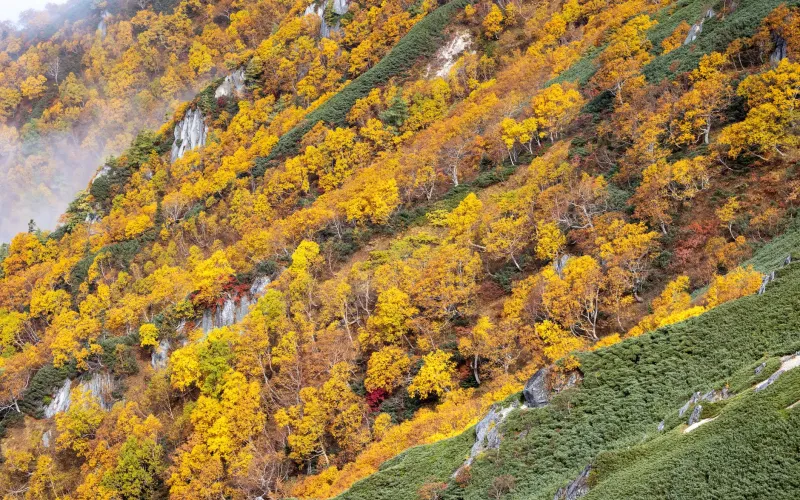
Spring brings cherry blossoms to the lower elevations and wild azaleas to the higher ridges. Summer mornings reward early starters with mist-filled valleys that burn off slowly as the sun climbs. Autumn transforms the forested sections into something that feels lifted directly from a woodblock print. Even winter has its quiet appeal — the trails thin out completely, the air sharpens, and the bare trees open up sightlines you can't get any other time of year.
Reading the Landscape: Geology Meets Legend
One of the genuinely surprising things about hiking in this part of Fukuoka is how much the physical geography explains about the cultural history. The mountains here were formed through volcanic and tectonic processes that left behind distinctive rock formations — and those formations, in turn, became the raw material for local mythology.
Certain outcroppings along the higher trails have names that translate roughly to things like "the seat of the gods" or "the watching stone," and when you actually stand next to them, the names make a strange kind of sense. There's something about their scale and placement that feels deliberate, even though you know intellectually that it's just geology doing its thing over millions of years. The local legends that grew up around these features aren't random — they're attempts to make meaning out of a landscape that genuinely inspires awe.
If you're hiking with any curiosity about geology, it's worth doing a little reading before you go. The Chikuho region's underground coal seams — the ones that drove Nogata's 20th-century boom — connect directly to the broader story of how these mountains formed. Standing on a ridge and knowing that the ground beneath the valley floor once fueled much of Japan's industrial revolution adds a layer of weight to the view that no amount of Instagram filters can replicate.
Practical Notes for International Hikers
A few things worth knowing before you lace up:
Trail signage in this area is primarily in Japanese, so downloading an offline map before you head out is genuinely useful. Apps like Yamap — Japan's most popular hiking navigation platform — have coverage for many of Nogata's trails and are worth the small subscription cost for a trip like this.
Access to most trailheads is easiest by car, though some routes can be reached via local bus with a short walk. If you're basing yourself in Nogata city center, asking at your accommodation about trail access is usually the fastest way to get current, local information — staff tend to know which routes are well-maintained and which ones require a bit more navigation confidence.
Timing matters more than you might expect. These trails don't have the infrastructure of more tourist-facing hiking destinations, which means starting early is smart — both for weather reasons and because you'll want the light for the views. Most of the accessible peaks in this area are half-day to full-day hikes, so plan accordingly.
What to bring is pretty standard hiking kit: layers, rain gear (Kyushu weather can shift fast), plenty of water, and snacks. There are no mountain huts or vending machines on these routes. That's not a complaint — it's part of what makes them feel real.
The Part That Sticks With You
There's a particular moment that happens on almost every hike in this part of Nogata — usually somewhere near the top, when the trees thin out and the view opens up. You stop, catch your breath, and realize that you're standing somewhere that probably looks almost exactly the same as it did two hundred years ago. The valley has changed. The towns have changed. But the ridge, the wind, the way the light moves across the hills — that's unchanged.
For travelers who come to Japan chasing something authentic, something that hasn't been curated for consumption, that moment is worth every step of the climb. Nogata's mountains aren't famous. They're not on the lists. And that, it turns out, is exactly why they're worth every step.